
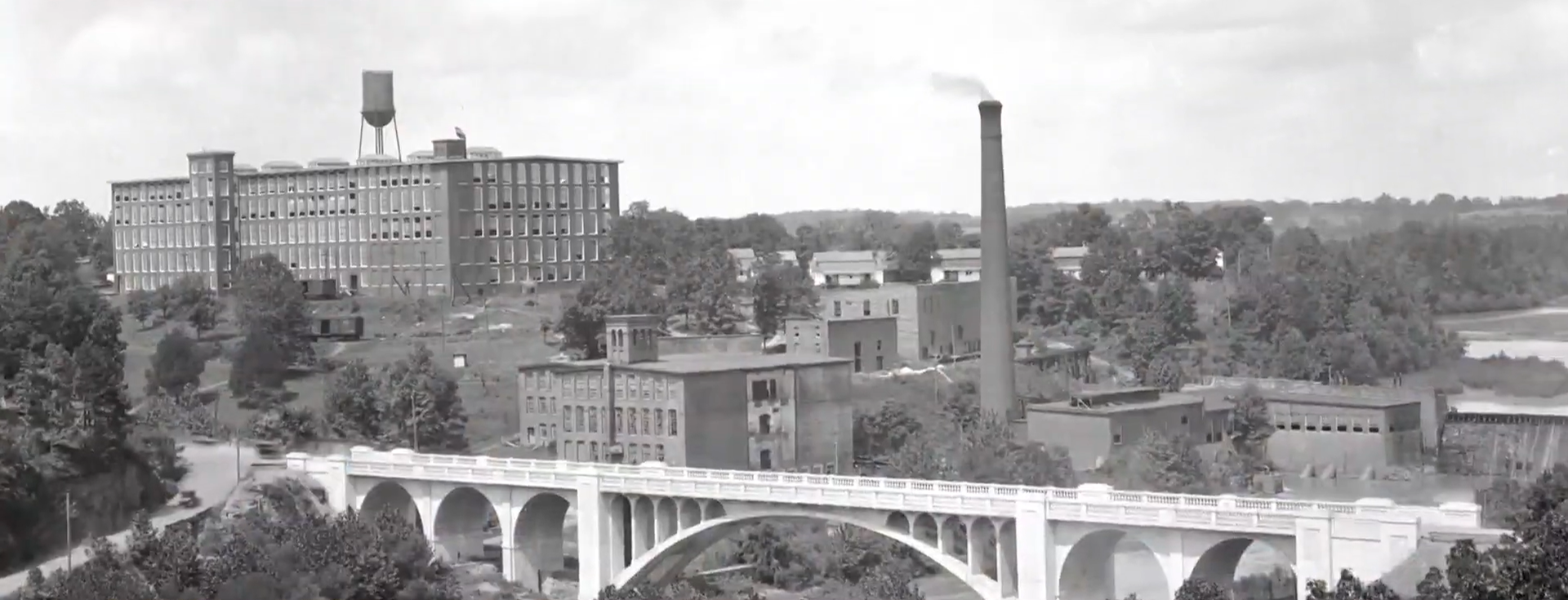
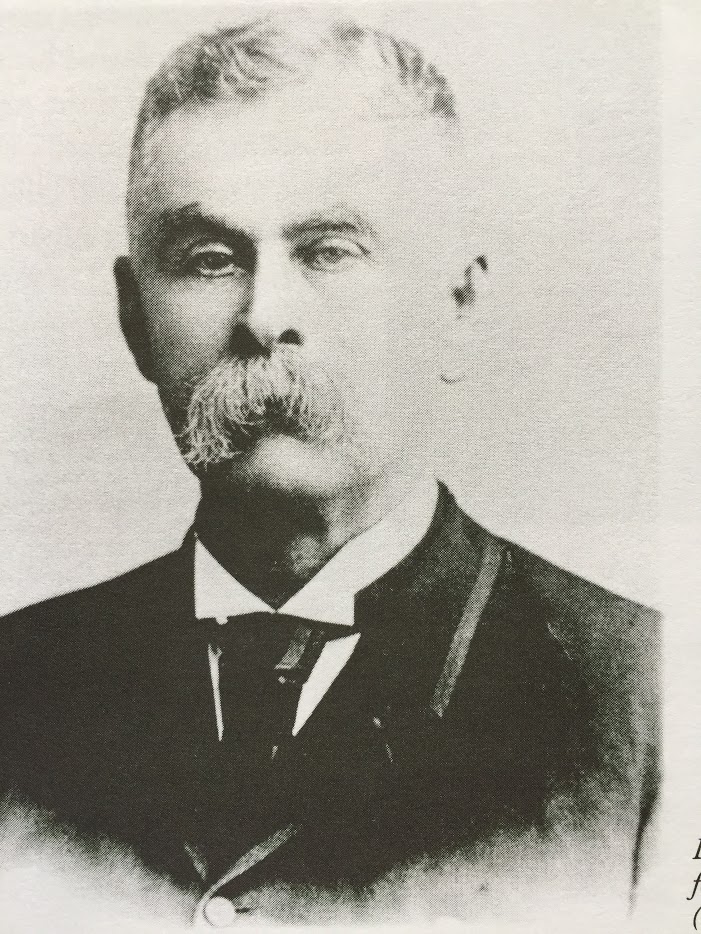
 Over its 120-year history, Converse Mill can't stop reinventing itself. In the mid-1850s, Dexter Edgar Converse and his family headed from Vermont to the Carolinas to join the textile boom. After working at a mill in Lincolnton, NC and Glendale, SC, he founded D.E. Converse Company in 1866 and later co-founded the Clifton Manufacturing Co. in 1880. Cotton was the king, at Converse pushed for quick expansion to stake his claim in the region. By 1896 there were three mills; two located in Clifton and the third just north of Spartanburg in an area than now bears the name of its 19th century investor.
Overlooking the Pacolet River at the former site of the South Carolina Manufacturing Company iron works, Clifton Mill Number 3 the precursor to Converse Mill was designed by noted industrial architectural firm Lockwood Green of Boson. Once construction was complete in 1896, Dexter Converse had built the largest textile mill in the world, containing 32,000 spindles. Then, disaster struck.
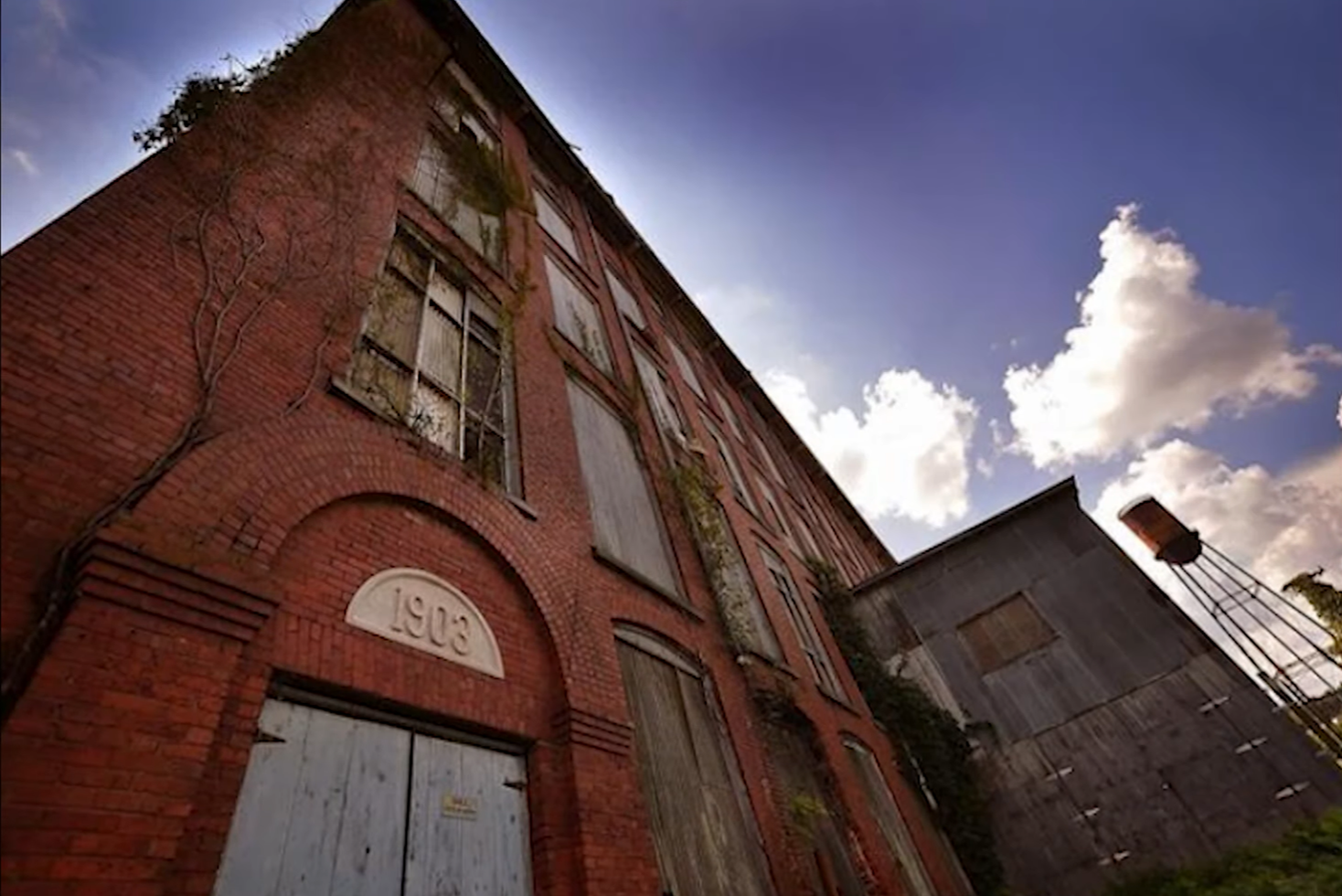
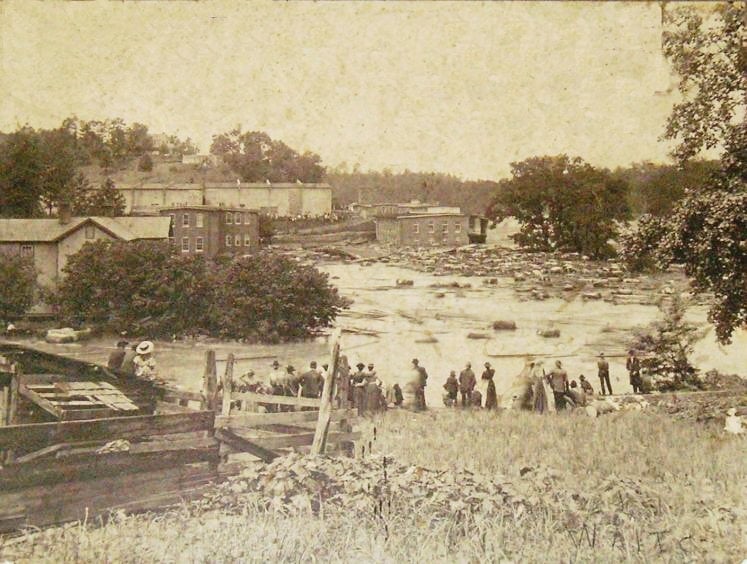 After gaining a reputation for creating the best textile goods in the South, a devastating flood ravaged the area. The Pacolet River often flooded but early June 1903 saw several back-to-back days of light rain which turned heavy on June 6th. By 4 a.m. June 7th, the river swelled to 20 feet above normal. The waters swept away bridges, churches, businesses, 60 homes, and six textile mills. Mill Number 3 in Converse was a complete loss and Mill Numbers 1 and 2 suffered extensive damage. The nearby train trestle that connects Atlanta and Charlotte was also lost, further cutting off critical recovery supplies.
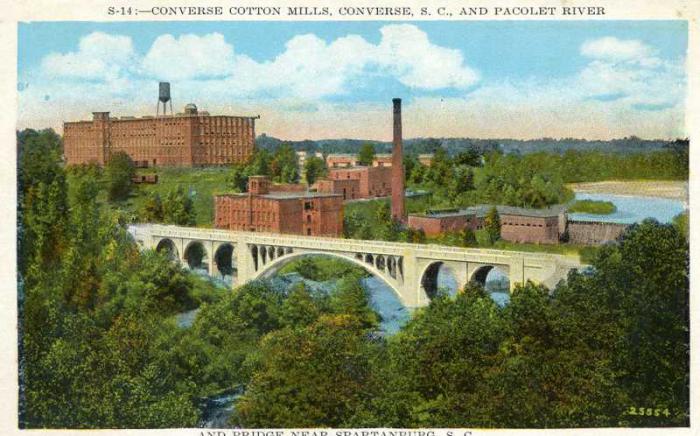 After surveying the extensive damage, Clifton Manufacturing President Victor Montgomery released a statement to the press:
Pacolet Mill No. 3 will be rebuilt at once. We have already employed a large number of men and are giving all able-bodied people employment who can use a pick and clear debris. It will probably be three months until the mill is running again. Contracts will be signed at once for the completion and restoration of the mill. Through sheer grit and determination, the community began repairing the mills almost immediately starting with Mill Number 3 which was relocated to higher ground, where it still stands today. Production resumed six months later. The iconic water tower was also erected as part of the rebuild.
 Converse Mill continued to expand in the following decades. In 1949 and 1952, one story additions were constructed. By the final expansion, Spartanburg's hold on the textile industry began to loosen. In 1965, the Clifton Manufacturing Company was sold to Virginia-based textile firm Dan River Mills. It was the beginning of the end as the company shut down all three local mills between 1968 and 1973. Converse Mill was used as a warehouse for many years while Mill Number 2 was still operated in limited capacity by Tuscarora Yarns until the 1990s and subsequently demolished in 2013. Mill Number 1, also used as storage after it ceased operation, was demolished in 2002. The only remaining vestige of the vast Clifton Manufacturing Company is Converse Mill.
The influence of textile pioneer Dexter Converse on Spartanburg, let alone the cotton milling industry, can still be felt today. Without the operations of his three mills, especially Converse Mill, the city of Spartanburg wouldnt be what it is today: a thriving area steeped in southern charm and home to an eclectic mix of business, recreation, art, and entertainment. The legacy of the Converses also lives on through Converse University which they co-founded in 1898 as a womens institution of higher learning.
 In the 21st century and after sitting vacant for decades, a California-based family acquired the Converse Mill and relocated to Spartanburg to reimagine a new life for the weary building. The great recession and other setbacks delayed progress for many years. Now, Converse Mill is ready for its next reinvention and an extension of its own legacy loft apartment living nestled near the scenic Pacolet River. The mills large footprint and masonry work allowed us to design the community with unique features and details at every turn.
Converse Mills reinvention is part of local history, and its waiting to welcome you home. Soaring ceilings, large windows, and original brickwork give an authentic loft living feeling. And we've created amenity spaces that are on your shortlist from the outdoor pool and fireside pavilion to the impressive fitness center, Converse Mill Lofts now seamlessly blends rich history with modern convenience for a one-of-a-kind living experience.
Find your place in history at Converse Mill Lofts.
MILL LIFE IN THE EARLY TWENTIETH CENTURY
The contribution of Converse Mill to the local economy is immeasurable. What is measurable is the sheer size of the operation that brought so many jobs to Spartanburg and made a small town a big city.
.jpg)
INVESTING IN THE FABRIC OF A NATION
Textile mills were a relatively safe investment at the turn of the century. Investors near and far would buy shares worth $100 each -- over $3,500 in today's money.
A DIAMOND IN THE ROUGH
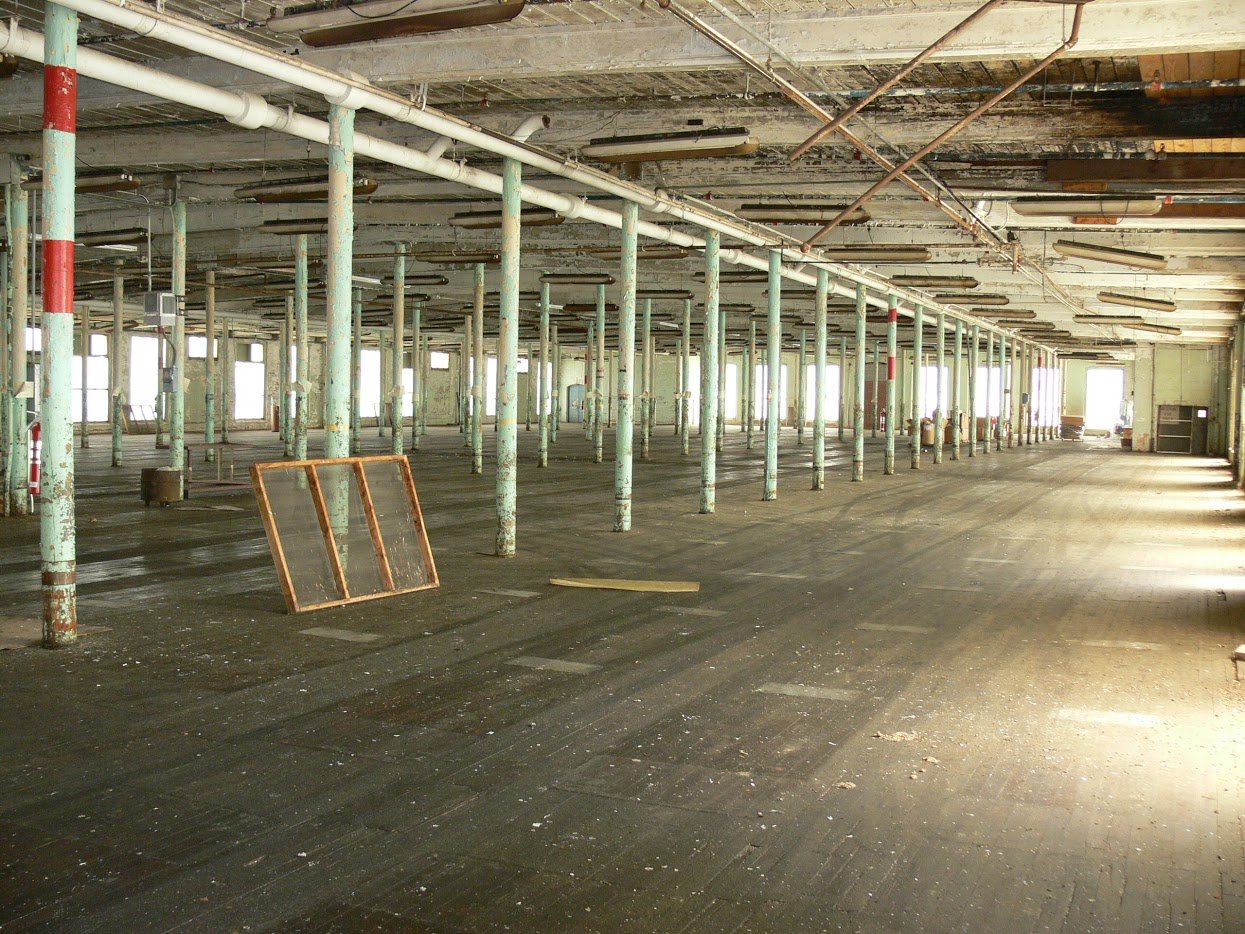
Before work began on converting the mill into luxury loft-style apartments, Converse Mill was abandoned for decades. To put it simply, the place was in rough shape. But the skillful design and meticulous construction practices of the early 1900s ensured the structure would withstand the march of time. Take a look at a selection of images captured prior to restoration.
.jpg)
.png)
.jpg)

.jpg)
.jpg)


.png)
.png)
REINVINTING THE PAST
Converse Mill Lofts is rising from the proverbial ash heap of time and emerging as the Spartanburg and Greenville area's premier luxury apartment living destination. By partnering with the best engineers, designers, and builders, we're poised to bring you a lifestyle unlike anything you've expeirenced.
Energize in the 24 Hour Fitness
Center Loaded with Modern
Equipment
Enjoy a Breath of Fresh Air at
the Outdoor Pool and
Fireside Lounge
Be One with Nature
as you Explore the Nearby
River, Trails, & Parks